In HVAC systems, performance doesn’t start at the furnace or air conditioner – it starts with the ductwork. No matter how advanced or expensive the equipment is, poor sheet metal fabrication can limit airflow, create comfort issues, and lead to ongoing service calls. In our line of work, we often see problems that don’t come from the equipment itself, but from small fabrication or installation mistakes made early in the build.
At Dynamic Metalworks Inc., we work closely with HVAC contractors and builders, and we’ve seen firsthand how certain sheet metal issues show up months or even years later. Below are some of the most common problems we encounter – and how proper fabrication can prevent them.
Incorrectly Sized Ductwork
Improperly sized ductwork is the most common thing which affects the HVAC performance. This usually occurs, if the fittings are made in a rush, or the sizing is copied from another work, or not giving enough room for airflow.
When the ducts are sized, smaller than the desired size, the system will experience difficulty to pass the air through it. The undersized duct will affect the airflow, if your home owner is complaining about an issue with airflow, this might be the reason for it, the system will struggle to keep proper air-flow which will affect the indoor-air comfort.
If the ducts are bigger sized, the airflow will be less than usual, which will be really uncomfortable, during both seasons.
Before, making the ductwork; double check the sizing, measurements. Irregular and unusual spaces require custom fabricated HVAC fittings.
Sharp or Improper Transitions
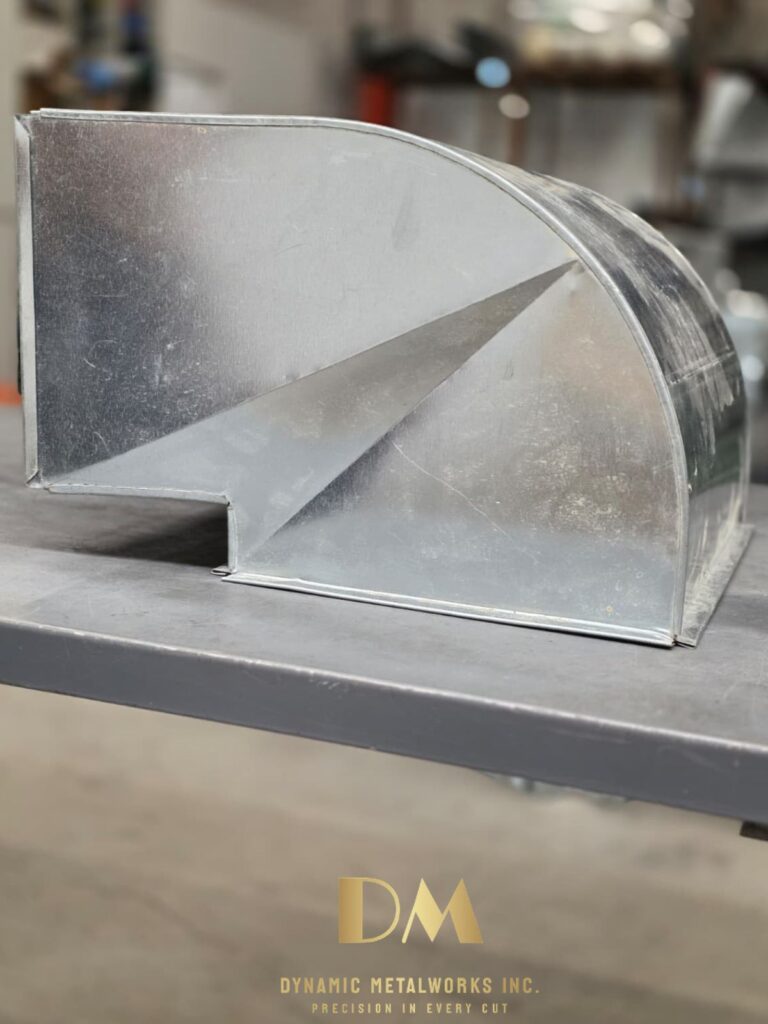
Using an irregular transition in place of a smooth one, is also not admissible. Abruptly fabricated, transitions can lead to less airflow, which causes a fluctuation, inside the duct.
This turbulence can be the reason for noise inside the duct, this reduces the efficiency of the system. If the home owner is complaining about rattling noise, this can be the reason.
A properly designed and fabricated transition, will allow for smooth airflow.
Taking the extra time to fabricate clean, proper transitions makes a noticeable difference in both comfort and sound levels.
Improper sealing and weak joints
Duct joints are the most common place where air-leakage occurs, even if you fabricated the ducts with most proper care. This leak in air will reduce the overall airflow. Before reaching the vent, hot/cold air gets out through the leaky area.
The higher the air-leak, the longer the system runs, also higher the energy bill.
The joints of the fittings should be properly sealed, to avoid air-leak. Thoroughly measured, cut and fabricated, fittings do not need extra patchworks.
Improperly Built Return Air Components
Even if we neglect the return air, it’s also important to supply air. A poorly made return air boots will cause imbalance in the system, the pressure in the whole system is affected.
When returns are restricted, the system works harder than it should.
The noise is increased, airflow is decreased, and overall life of the equipment is reduced.
Proper airflow balance is maintained with the aid of custom-made transitions and return air boots. The system functions more smoothly and effectively when returns are constructed correctly from the beginning.
Ignoring Space Constraints During Fabrication
In many homes; especially custom builds; space is very limited. It’s frequently hard to make mistakes in mechanical rooms, bulkheads, and frames. If ductwork is created without taking these limits into account, installers have to change fittings on the job site.
Adjustments made on the job typically result in difficult connections, crushed ducting, or impaired airflow. These shortcuts may eventually result in performance problems that are hard to identify.
This issue is avoided with exact measurement and unique construction. When fittings are built specifically for the available space, installation becomes cleaner, faster, and far more reliable.
Inconsistent Quality Between Jobs
If you depend on various vendors for HVAC fitting supply, the quality of products will vary. For a single project, if you are sourcing HVAC fittings from different suppliers, all the fittings will be different in quality, and performance.
Inconsistent ductwork can make balancing more difficult and increase installation time. It can also reflect poorly on the contractor when mechanical rooms don’t look clean or professional.
Working with a dedicated fabrication shop that maintains consistent standards helps avoid these issues. Uniform quality leads to smoother installs and fewer surprises on site.
How to Avoid These Problems
Most sheet metal issues aren’t caused by lack of effort; they’re caused by lack of planning or time pressure. The best way to avoid performance problems is to treat ductwork as a critical system component, not an afterthought.
Custom fabrication, proper measurements, and attention to detail go a long way. When ductwork is built to suit the project instead of being forced into place, HVAC systems perform the way they’re intended to.
Dynamic metalworks inc, ensure to maintain the consistency, and quality, in each product we make. Our goal is to support individual HVAC contactors, with high-quality, custom HVAC fittings, which are perfect in size, shape ,and in measurements.